
Commercial geothermal systems for Dallas–Fort Worth facilities
Large-scale geothermal HVAC for schools, churches, athletic facilities, healthcare campuses, municipal buildings, and data centers. Engineered, drilled, installed, and commissioned by one in-house team — licensed, bonded, and tracked in Procore.
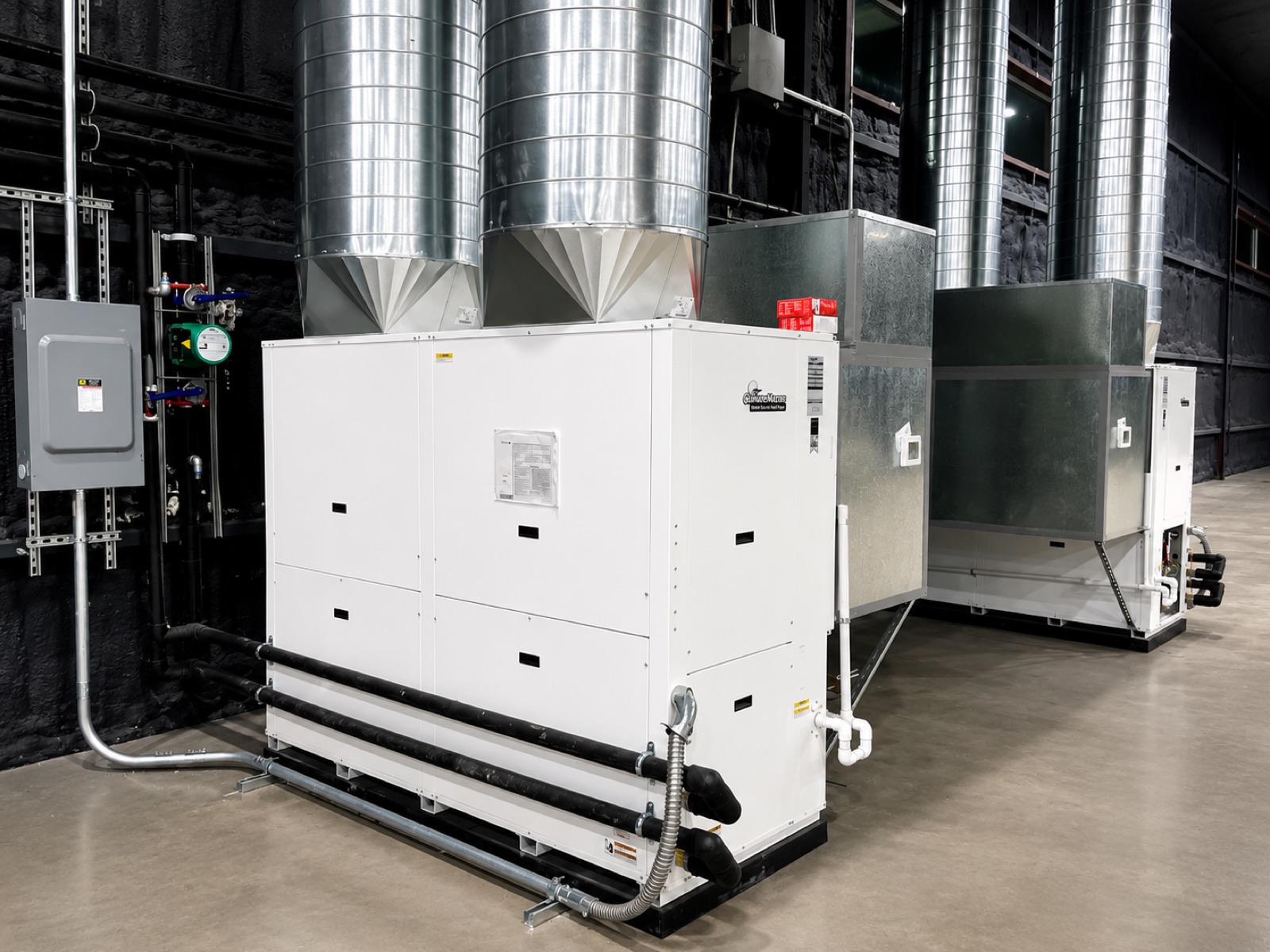
One building, zero rooftop units
A commercial geothermal plant lives indoors and underground. Nothing on the roof to bake, hail on, or replace every 15 years.
What is your building spending on HVAC?
North Texas commercial buildings spend roughly $2–$5 per square foot every year on heating and cooling. Geothermal cuts that by 40–70% — and in ERCOT territory, it also trims the peak demand that drives commercial rate structures, because a ground-coupled plant isn't fighting 105°F air at 4 p.m. in August.
The equipment story matters just as much. Rooftop units are replaced every 12–18 years. Geothermal indoor equipment runs 25+ years, and the well field is designed to last 50+ years — drill it once, and every future equipment swap reuses it.
What this means for a bond or capital plan
Over a 30-year building life, geothermal typically comes out 30–50% cheaper in total cost of ownership than conventional HVAC — it skips two to three full replacement cycles while paying less to run every single month.
Quick estimate: your annual HVAC spend
Drag to your building's size. Estimates use $2–$5/sq ft operating cost and 40–70% geothermal savings.
Rough planning numbers only — a real proposal starts with a load calculation and a test bore on your site.
Request a Commercial BidThe commercial incentive stack — up to 50% back
Commercial geothermal qualifies for the federal investment tax credit through 2035. The credit stacks in three layers.
Example: a $500,000 project
Federal credit at 30–50%: $150,000 – $250,000 back.
Eligible costs include heat pumps, drilling, loop installation, associated ductwork, controls, and labor. We document costs by category to support the claim.
No tax bill? Direct pay.
School districts, churches, and cities owe no federal income tax — so the law lets them take the credit as a direct payment from the Treasury. A tax-exempt board can capture the same 30–50%.
One honest caveat
This is a commercial-only incentive. The separate residential geothermal credit ended in 2025 — if someone quotes a federal credit on a house, the information is out of date.
Takeaway: after the credit, net installed cost is often comparable to conventional — with 40–70% lower bills from day one.
Home Run Alley: 55 tons in Lucas, Texas
A wide-open indoor athletic facility that has to stay comfortable through the worst DFW summers — every square foot of it conditioned by the ground beneath the parking lot.
Every trade on this job was ours
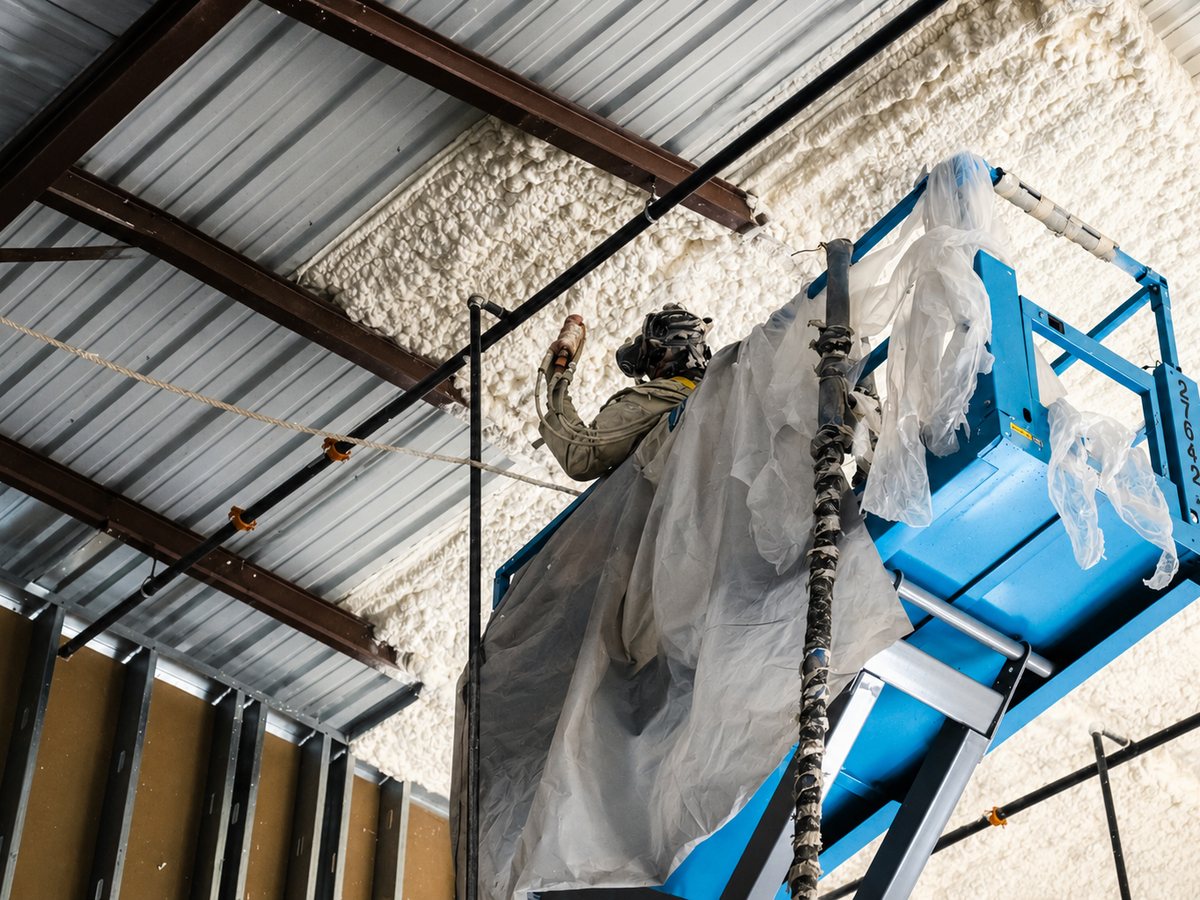
Excel crews drilled all 55 wells, designed and installed 200+ linear feet of 30-inch spiral duct tapering to 24-inch, applied 6–12 inches of spray foam with intumescent fire block paint, and commissioned all three WaterFurnace units.
The result: a steady 72°F inside, whether it's 19°F or 108°F outside, at operating costs well below a comparable conventional plant.
For a school board or facility committee, that's the real lesson — one accountable contractor, no coordination gaps between a driller, a mechanical sub, and an insulator who've never met.
Read the full case study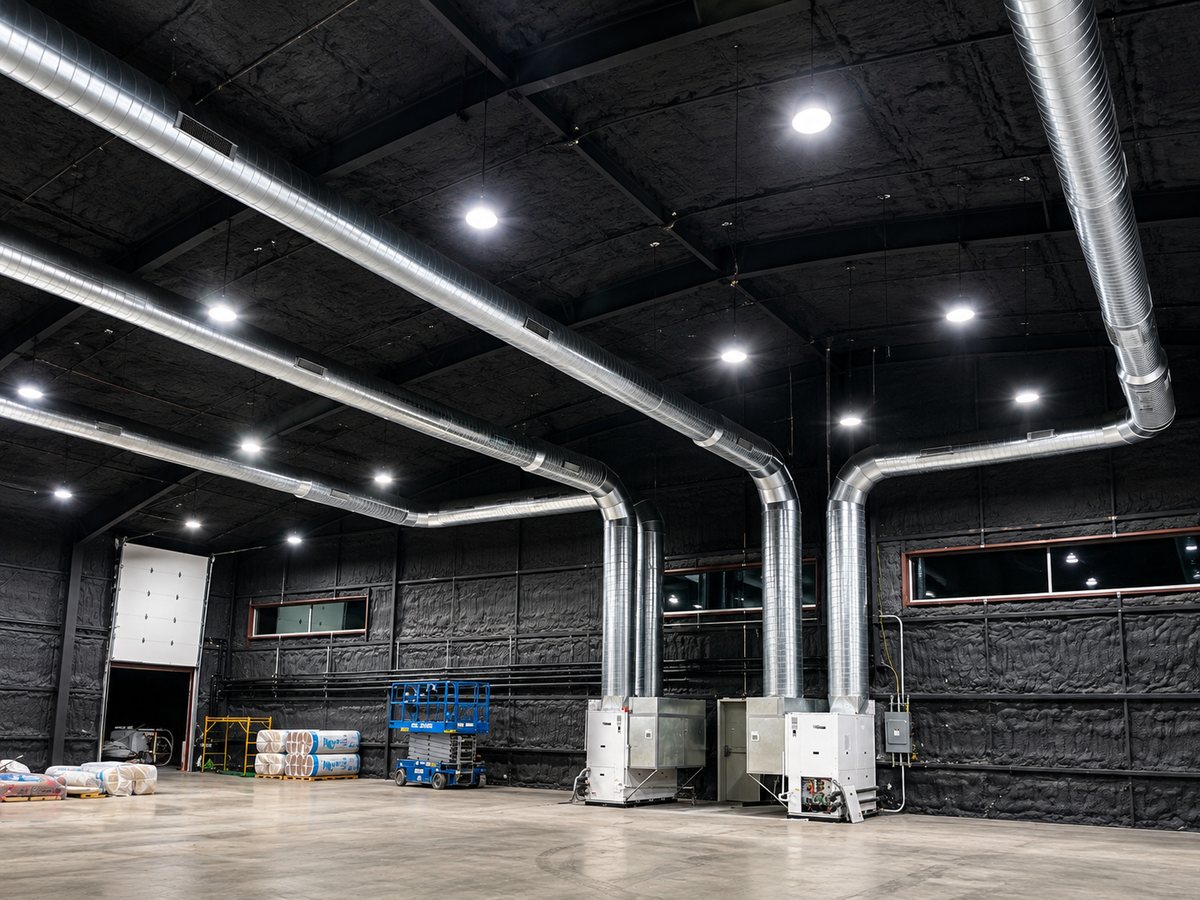
Six building types where geothermal pencils out fastest
K-12 schools & universities
Land for loop fields, predictable schedules, and buildings owned for 50 years. Direct pay puts the federal credit within reach of any district — a strong fit for the next bond package.
Churches & houses of worship
Tall sanctuaries, busy weekends, quiet weekdays. Geothermal handles the Sunday surge efficiently and idles cheaply the rest of the week — and most DFW churches sit on land with room for wells.
Athletic facilities
Huge open spans and brutal summer cooling loads — exactly what our 55-ton Home Run Alley system was built for. No outdoor condenser noise, no visual clutter.
Healthcare & clinics
Stable supply-air temperatures and humidity control without the swings air-source systems suffer in extreme weather. Quiet operation, no rooftop maintenance traffic over patient areas.
Municipal buildings
Proven technology with decades of performance data, lower taxpayer-funded operating costs, and Uri-grade resilience for public safety buildings that must not fail.
Data centers
The DFW corridor cools servers 365 days a year. Ground-coupled heat rejection doesn't care that it's 104°F outside — capacity holds exactly when air-cooled systems sag.
Engineered from a test bore, not a rule of thumb
Commercial systems aren't scaled-up houses. We drill a test bore on your site, measure how your ground actually conducts heat, and let that data size the field. Undersized fields degrade; oversized fields waste capital.
In Dallas clay and chalk, bores run 300–450 feet, spaced 15–25 feet on center, with reverse-return headers so every well pulls its weight.
Site assessment & load calculation
We review your plans, walk the building, and run a commercial-grade load calculation to set true capacity requirements.
Test bore & thermal conductivity
One bore on your site tells us how your soil moves heat. That number drives the whole loop field design.
Design, proposal & incentive analysis
Equipment selection, loop layout, duct design, and a cost proposal with the federal credit modeled in — including direct pay for tax-exempt owners.
Permits & scheduling
We handle mechanical and drilling permits across DFW municipalities and coordinate with your GC if there is one.
Drilling & loop installation
Our rigs drill the field; our crews set headers, pressure test, and grout. No drilling subcontractor exists on our jobs.
Mechanical installation
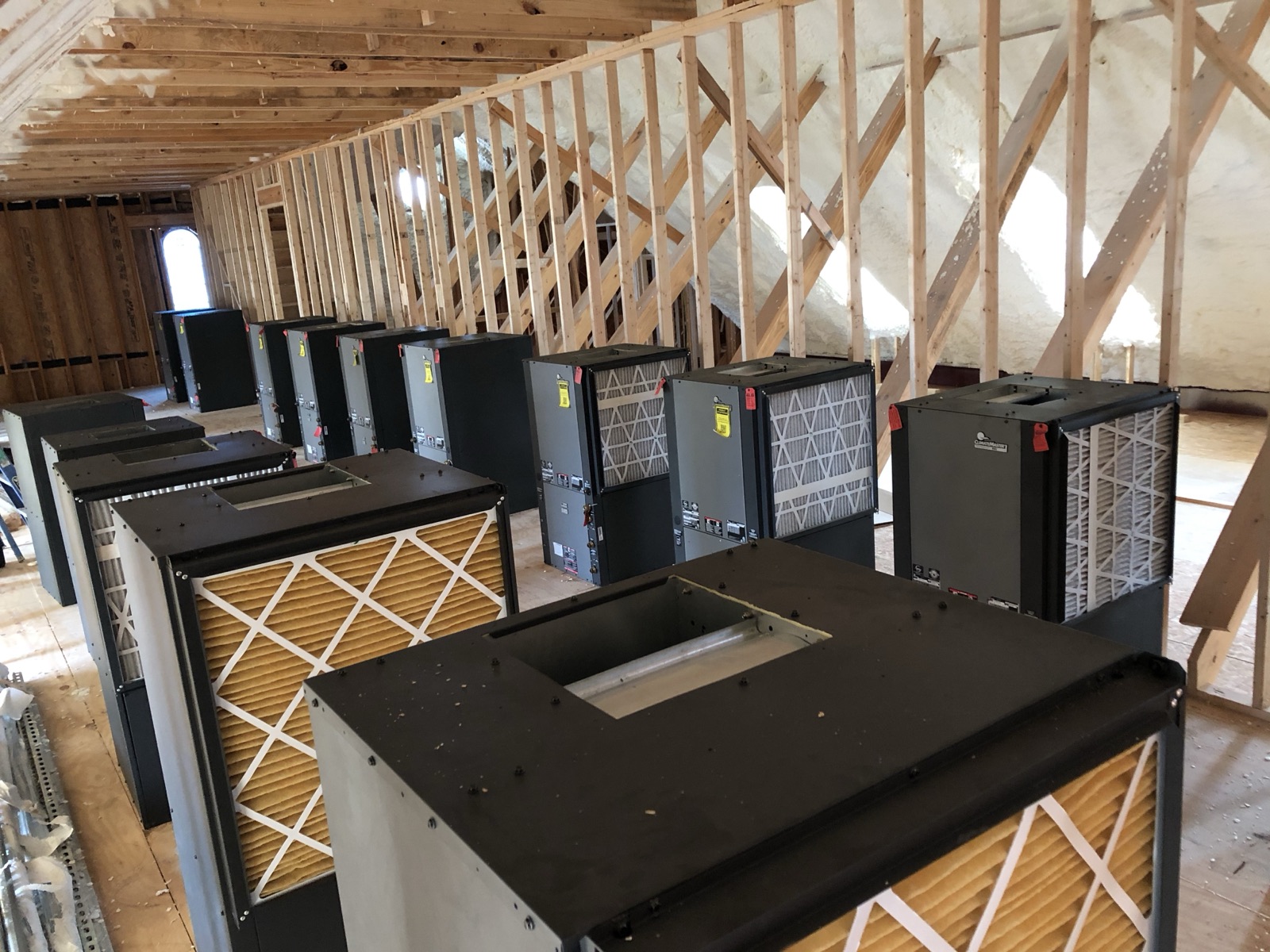
Heat pumps, custom-designed duct, piping, controls, and electrical — installed by Excel employees, logged daily in Procore.
Commissioning, training & handoff
Airflow verification, loop balancing, BMS integration testing, staff training, and full as-built documentation.
The numbers a board will ask about
A worked example: 40-ton system, 30,000 sq ft facility.
| Line item | Conventional rooftop | Geothermal |
|---|---|---|
| Installed cost | $280,000 | $420,000 |
| Federal credit (30%) | — | −$126,000 |
| Net cost | $280,000 | $294,000 |
| Annual energy savings | — | $18,000 – $30,000 |
| Payback on the premium | — | 1 – 3 years after credit |
| Year-15 status | Full replacement, $320,000+ | Still running; well field intact |
| 30-year total cost of ownership | Baseline | Typically 30–50% lower |
Figures are representative; your proposal is built from your building's load calculation, test bore data, and utility rates. See the full cost breakdown.
What boards, architects, and facility managers ask us
Need something deeper — spec sheets, references, licensing docs? Contact us and we'll put together a package for your committee.
Yes. Direct pay converts the commercial investment tax credit into a payment from the Treasury, so tax-exempt entities — districts, churches, cities — receive the incentive as cash even with zero federal tax liability.
Less than you'd think. Bores are spaced 15–25 feet on center and can sit under parking lots, playgrounds, or athletic fields. Once drilled and capped, the field is invisible and the surface is fully usable.
It scales with tonnage and bore count, but because we self-perform drilling, duct installation, and insulation, there are no subcontractor hand-off delays. Home Run Alley — 55 wells at 400 feet — was executed end to end by Excel crews on one schedule.
Yes. The system rejects heat into 67–69°F earth, so capacity doesn't fall off on the hottest afternoons the way air-cooled rooftop units do. Home Run Alley holds 72°F inside regardless of the forecast — and the ground loop shrugged off Winter Storm Uri, too.
Rooftop units are replaced every 12–18 years; geothermal indoor equipment runs 25+ years and the well field is designed to last 50+. A building skips two to three replacement cycles while paying 40–70% less to operate — that's how total cost of ownership lands 30–50% lower.
No. We own our drilling rigs, design and install spiral and rectangular duct with our own crews, and apply spray foam with our own teams. One contract, one accountable team, one Procore log.
The in-house trades behind every commercial job
Well Drilling
Our own rigs have bored 22,000+ feet on a single project. Test bores to full fields.
Explore well drillingMaintenance & Repair
Commissioning isn't goodbye — seasonal maintenance and 24-hour response for every system we set.
Explore maintenance & repairSpray Foam Insulation
Envelope work that shrinks the tonnage you have to buy — applied by Excel crews.
Explore spray foam